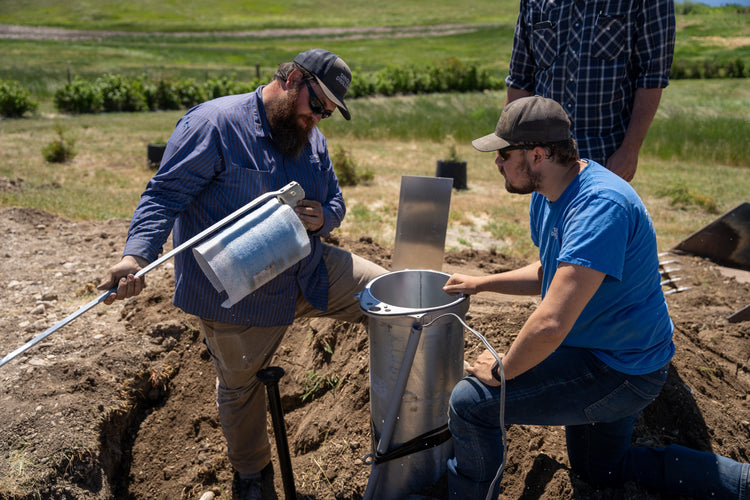
Discover what sets Merrill’s H2O Pitless Unit apart. Engineered for durability, easy installation, and code compliance, it includes a built-in expansion tank, universal VFD mount, and optional stainless steel components—all inside a 12" casing.
👉 Download the brochure, watch the install video, and hear why drillers prefer it.
At Merrill Manufacturing, we’ve worked with professionals like you for over 75 years. Here’s what we’ve learned about selecting the right yard hydrant for your application—and how to avoid costly callbacks or replacements.
Whether you're a wholesaler, a new technician, or someone supporting contractors in the field, knowing the full lifecycle of a water system — from drilling through distribution — is essential. The Water Systems Handbook (Book I–IV) outlines the full construction of a sanitary, high-performing well system, while the Merrill Catalog provides the specific components used at each stage.
This guide gives your team a clear, technical, manufacturer-approved overview of how a water system works and where each Merrill component fits in.
1. Stage One: Drilling & Well Construction
Where groundwater access begins.
The Water Systems Handbook explains that proper well construction includes:
Drilling to an aquifer appropriate for long-term adequate yield
Setting casing to isolate the well from contaminated shallow layers
Sealing the annular space with grout to prevent surface water infiltration(Book I, Well Construction)
A sanitary well requires:
✔ Casing termination above ground
The Handbook requires wells to be completed above finished grade to avoid contamination from surface water.
✔ A sanitary well cap or well seal
A critical protection to prevent insects, debris, and vermin infiltration.
✔ A proper vent
Vents must be screened to allow pressure equalization while keeping out contaminants.
Merrill components used at this stage (Catalog pp. 80-85):
Well caps
Sanitary caps
Well seals
All provide casing-size charts and specifications.Merrill2026
Your browser does not support the video tag.
Sanitary well caps and seals help protect the well opening from insects, debris, and surface contamination.
2. Stage Two: Submersible Pump Installation
How water is lifted from the aquifer.
According to the Handbook, submersible pumps are installed deep in the well and connected by drop pipe, wire, and a discharge assembly (Book II, Pump Installation).Water Systems Handbook 13th Edition
Key system components:
✔ Drop pipe
Transmits water from the pump to the surface.
✔ Pump cable & splice kit
Provides power while maintaining waterproof electrical connection.
✔ Safety rope
Provides extra safety if pipe fails and supports pump weight during lowering and servicing.
✔ Check valves
Prevent backflow, pressure loss, and water hammer. The Handbook and Merrill catalog align on the need for multiple check valves in deep wells.
Merrill components (Catalog pp. 151–163):
Several material options available in check valves
No-lead check valves
Variable Flow Check Valve
Stainless steel options and specialty valves
Check valves and pump accessories help protect the submersible pump system and keep water moving in the right direction.
3. Stage Three: Pitless Discharge & Sanitary Sealing
The transition between underground and the pressure system.
The Water Systems Handbook defines pitless units and adapters as components that:
Provide a watertight, frost-proof connection
Prevent contaminants from entering near-surface openings
Allow full service of submersible equipment without or limited excavation(Book IV: Components)
Merrill Pitless Units (Catalog pp. 42-79):
Factory pressure-tested
ASSE/PAS-certified watertight design
Positive mechanical seal with stainless adjusting nut
Stainless steel on all parts touching water
Full diameter access inside well
These ensure long-term sanitary integrity and easy well maintenance.
SPP Pitless Units help create a watertight, frost-proof connection between the well and the underground discharge line.
4. Stage Four: Distribution to the Pressure System
Where water leaves the well and enters the home or facility.
This stage includes:
✔ Pressure tank
Maintains constant water pressure and reduces pump cycling.(Book VIII, Pressure Tanks – Handbook)
✔ Pressure switch
Controls pump on/off operation based on waterline pressure.
✔ Relief valve
Protects the system from dangerous overpressure.
✔ Tank tees & fittings
Connects tank, switch, gauge, drain valve, and relief valve.
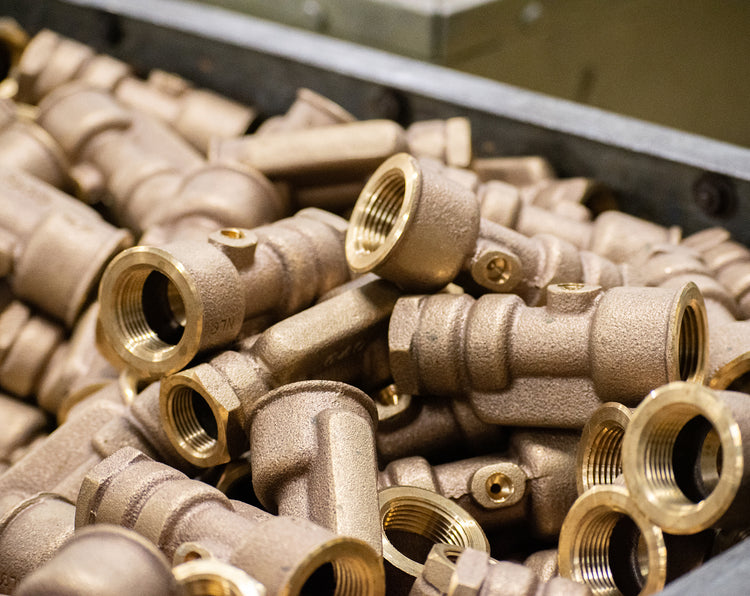
Merrill manufactures essential fittings that appear throughout this part of the system.
Your browser does not support the video tag.
Heavy-duty pressure switch features help control pump operation based on system pressure.
5. Stage Five: Yard Hydrants & Outside Water Distribution
How water is delivered outdoors.
The Water Systems Handbook describes hydrants as surface-accessible delivery points requiring frost protection and proper drainage.
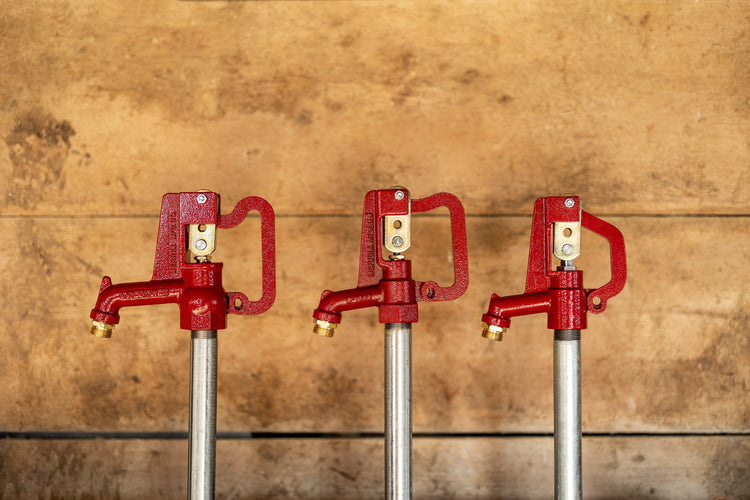
Merrill hydrants — AnyFlow, Hide-Drant, C-1000, M-2000, R-6000, E-5000, and several more — use a drain-back design where:
The valve body is buried below frost line,
Water drains into the ground or a clean gravel bed after shutoff.
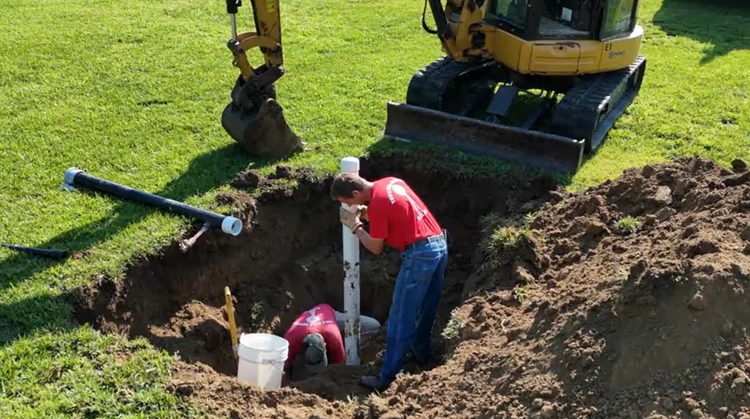
Correct installation prevents freeze failures, back-siphonage, and contamination risks.
AnyFlow hydrants use a drain-back design to help protect water access from freezing after shutoff.
6. Stage Six: Inside Distribution & Final Use
How water moves inside the building.
Components include:
Shutoff valves
Manifold fittings
Well faucets
Hose bibbs
Indoor water distribution fittings
While Merrill is known primarily for external well system components, many of its parts (e.g., NL fittings, valves, adapters) integrate into indoor systems depending on the application.
7. Understanding the System as a Whole (Why This Matters for Wholesalers & New Techs)
The Water Systems Handbook stresses that every well is a complete sanitary system, not a collection of random parts.
A wholesaler or technician who understands the entire path:
aquifer → pump → pitless → pressure tank → distribution → hydrant
can:
Recommend the right components
Reduce contractor callbacks
Help diagnose system failures
Increase system longevity
Ensure sanitary compliance
Improve customer trust
And because Merrill covers nearly every stage with certified components, technicians can build a compatible, long-lasting reputation using one supplier.
8. Where Merrill Components Fit in the Full System (Catalog-Verified)
System Stage
Merrill Component
Catalog Pages
Wellhead
Well caps, seals, vents
80–85
Submersible pump
Check valves
151–163
Frost protection
Pitless units, adapters
42–79
Yard distribution
Frost-proof hydrants
8–41
Above-ground and below-ground plumbing
Fittings, valves, accessories
See index
All page references are directly verifiable in the 2026 Catalog. You can click Here: Merrill2026
Final Takeaway
Wholesalers and new technicians don’t just sell components — they support an entire sanitary water system.
When you understand:
How wells are drilled
How pumps are installed
How pitless units protect sanitation
How pressure tanks assist flow
How hydrants deliver water
How fittings ensure system integrity
…you become a trusted partner to contractors, drillers, and homeowners.
And with Merrill’s catalog covering nearly every stage from drilling to distribution, your team can confidently recommend reliable, certified, American-engineered components backed by 77 years of industry experience.
Follow Us
Subscribe to our newsletter!
Stay in the loop with the latest offers, news and product updates!