If you or your company ever ordered from Merrill before, you may have registered an account on our website in the past. With our new website, these accounts are no longer necessary! Now, instead, your company email will grant you access to viewing your past orders, allow you to place new orders with our entire catalog visible to you, and have better access to the Merrill team!
These features are almost ready for you, but we need a little more time to round out the edges. In the meantime, you can still view our entire product catalog. If you have any questions about our new web experience, please contact your territory manager!
Pressure problems are one of the most common complaints in residential and agricultural water systems. Whether it’s low pressure, rapid cycling, surging, or intermittent flow, pressure-related failures almost always come down to a handful of predictable issues in the well system.
Using only verified guidance from the Water Systems Handbook (13th Edition) and the engineering design of Merrill components, this guide helps wholesalers and technicians quickly diagnose the root cause — and select the right components to correct it.
1. Understanding How Pressure Is Maintained in a Well System
According to the Water Systems Handbook, system pressure is affected by:
The pump’s ability to deliver water at the required head
Proper operation of the check valve(s)
Pressure tank sizing and air charge
System integrity at the pitless unit or adapter and all fittings (Book II & Book VIII, Pumping Systems & Pressure Tanks)
If any of these are compromised, the system loses pressure stability.
2. Problem #1: Rapid Pump Cycling (Pump Short-Cycling)
This is one of the most frequent complaints.
Technical Causes (Handbook Book VIII)
Undersized pressure tank
Waterlogged tank (air charge lost)
Leaking check valve
Pitless adapter leakage causing pressure drop
How Merrill Products Solve It
✔ Merrill Check Valves (NL & Standard)
Stainless Steel Check Valve View product details → No-Lead Bronze Control Center Check Valve View product details →
(Catalog pp. 151–163) A leaking check valve allows water to fall back toward the pump, forcing the pressure switch to cycle repeatedly.
Merrill’s features that matter:
Positive-seal poppet design with stem guides
Variable Flow Check Valve eliminates water hammer that accelerates wear on other components
Result: Restores system integrity and eliminates cycling caused by backflow.
✔ Merrill Pitless Units or Adapters
(Catalog pp. 42–79) If the pitless gasket or mechanical seal is compromised, pressure slowly leaks off in the discharge line — causing the pump to restart frequently.
Merrill advantages:
Factory pressure-tested to ensure quality
Heavy-duty spud gaskets or O-rings
Stainless steel adjusting nut for tight mechanical seal with other stainless steel components
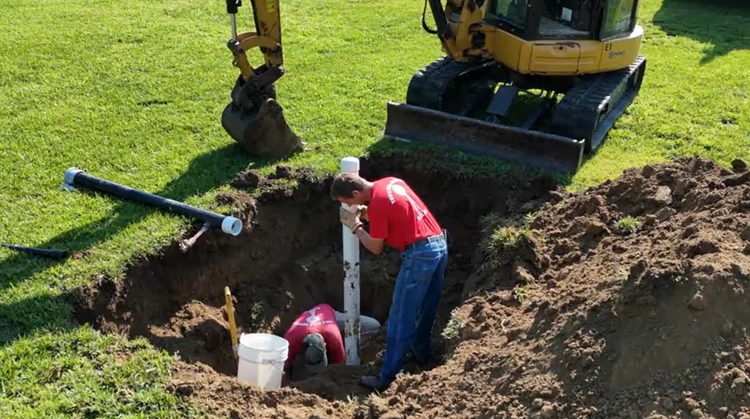
Download the SP Pitless Unit installation video
SP Pitless Unit installation demonstration. Explore Merrill pitless units, kits and adapters →
3. Problem #2: Low or Inconsistent Pressure
Symptoms: weak faucet flow, variable shower pressure, sprinklers not performing.
Handbook Root Causes (Book II – Pumping Systems):
Incorrect check valve placement
Air leaks in suction/discharge components
Restrictions or partial blockage
Pump not delivering proper head
How Merrill Components Help
✔ Check Valve Placement
Merrill’s catalog clearly specifies installation and proper orientation. Incorrect placement leads to:
Valve chatter
Flow restriction
Loss of prime
Pressure fluctuations
Using a Merrill Variable Flow Check Valve (VFC) eliminates chatter in deep wells and stabilizes pressure.
✔ Merrill Pitless Units (Full-Diameter Access)
A pitless that doesn’t align perfectly introduces turbulence and pressure loss.Merrill’s design ensures full-diameter of the well access and smooth flow transition.
✔ Merrill Fittings
High-quality tees, elbows, and NL fittings reduce air intrusion and turbulence — small issues that create big pressure problems.
SPP Pitless Unit View product details → Merrill Fittings Browse all fittings →
4. Problem #3: Air Spurting From Fixtures
This is a common sign of check valve leakage or air entrainment.
Handbook Explanation
Air in the line usually indicates:
Leaking check valve
Drop pipe leak
Water level inside the well is low or at the pump intake
How Merrill Addresses It
Merrill NL and standard check valves provide tight, reliable sealing
Merrill pitless units or adapters have robust O-rings and gaskets that prevent air intrusion
Merrill replacement kits help restore older systems
Parts Kit PF M-2000 View product details → Stainless Steel Foot Valve Screen with End Cap & Screw View product details →
Air spurting is one of the easiest problems to fix with the correct Merrill part.
5. Problem #4: Water Hammer & System Shock
Water hammer causes:
Pressure drops
Vibration and noisy pipes
Premature pressure switch or pump failure
Check valve damage
Handbook Insight:
Improper check valve spacing or rapid column reversal in deep wells is a primary cause. (Book II, Submersible Pumps & Vertical Lift)
Merrill’s Solution: Variable Flow Check Valve
(Catalog pp. 157–158)
View the Merrill Variable Flow Check Valve →
The VFC allows contractors to set up a consistent variable flow and greatly reduce or eliminate shock. This is one of the most product-differentiated solutions Merrill offers.
6. Problem #5: Pressure Loss Over Time
If pressure slowly bleeds off when no water is running, the issue is almost always:
Small leaks at one or more components
Pressure tank bladder failure
Fitting or thread seal compromise
Handbook Notes:
Maintaining system integrity is essential for sanitation and performance. (Book I–II)
Merrill Solutions
Replace failing check valve → Merrill NL or stainless steel
Restore pitless seal → Merrill replacement spud gasket or O-rings with proper gasket seal
Use Merrill high-quality fittings with thread sealant for proper sealing
Replace aging hydrants or valves causing backflow conditions
Proper seal seating at the wellhead is the difference between a system that holds pressure and one that bleeds off overnight.
7. Quick-Diagnosis Chart (Training-Friendly)
Symptom
Likely Cause (Handbook)
Merrill Component That Fixes It
Rapid cycling
Tank bladder failure, small tank
Merrill NL tank tee, Merrill fittings
Low pressure
Flow restriction, check pressure switch
Merrill pressure switch, Merrill hydrants with proper flow rating
Air in lines
Check valve leak, air intrusion
Merrill check valve replacement
Water hammer
Valve spacing, vertical lift
Merrill Variable Flow Check Valve
Slow pressure loss
Leaking component, failing gasket
Merrill replacement or leaking component
Final Takeaway: Pressure Problems Are Component Problems
Nearly every pressure-related issue in a well system ties back to:
Pressure switch settings and operations
Component leak
Pressure tank bladder failure
The Water Systems Handbook provides the diagnostic reasoning. The Merrill Catalog provides the components to fix it — reliably, safely, and to sanitary pitless unit standards.
This blog not only trains your wholesalers and technicians — it positions Merrill as the engineering-first manufacturer solving real-world issues.
Providing safe drinking water isn't just a good practice — it's federal law. Over the past decade, U.S. regulations have tightened dramatically around lead content in potable water systems, forcing manufacturers, wholesalers, and installers to adapt.
Merrill Manufacturing has responded with a complete line of No-Lead (NL) components — hydrants, check valves, fittings, and adapters — engineered and labeled specifically for drinking water compliance.
This guide explains exactly why NL components matter, what federal regulations require, and how wholesalers can educate technicians and contractors using credible, engineering-based information.
1. What "No-Lead" Actually Means (Federal Law)
Under the Reduction of Lead in Drinking Water Act (effective 2014):
✔ Components in contact with drinking water must contain
no more than 0.25% weighted average lead content.
This regulation applies to:
Valves
Fittings
Hydrants
Adapters
Backflow prevention components
Any component carrying potable water
Products must also meet NSF/ANSI lead-free compliance standards to be legally sold for drinking water distribution.
This is why Merrill labels all NL products clearly in the catalog.
Nothing is left to guesswork.(Catalog NL Check Valves, NL Hydrants, NL Adapters — designated "NL")
The NL stamp helps identify Merrill components designed for No-Lead compliance.
2. What the Water Systems Handbook Says About Sanitary Protection
The Water Systems Handbook focuses heavily on preventing contamination at every point in a potable system. It specifies that:
Components must prevent surface water, pollutants, insects, or chemicals from entering the water supply.
All equipment in contact with drinking water must be designed to reduce contamination risk and maintain sanitary integrity.
Sanitary well caps help prevent surface water, insects, debris, and other contaminants from entering the water supply.
Using No-Lead brass, stainless steel or certified materials is part of maintaining this sanitary standard — because lead is, by definition, a chemical contaminant.
For Merrill, NL products directly support these Handbook mandates for sanitary drinking water systems.
3. Merrill's No-Lead Product Lines (Catalog-Verified)
The Merrill Catalog clearly marks every NL component with the "NL" designation. These include:
✔ No-Lead Check Valves
(Catalog pp. 151–163)Designed for potable systems where backflow prevention must meet lead-free requirements.
Merrill NL-stamped components: C-1000 Valve Body, No-Lead Pressure Gauge, and No-Lead Brass Tee Handle Sampling Valve.
✔ No-Lead Hydrants
Specific Merrill hydrant models are available in NL versions, ensuring compliance where hydrants are plumbed into potable supply lines.(Catalog hydrant section pp. 8–41)
✔ No-Lead Fittings & Adapters
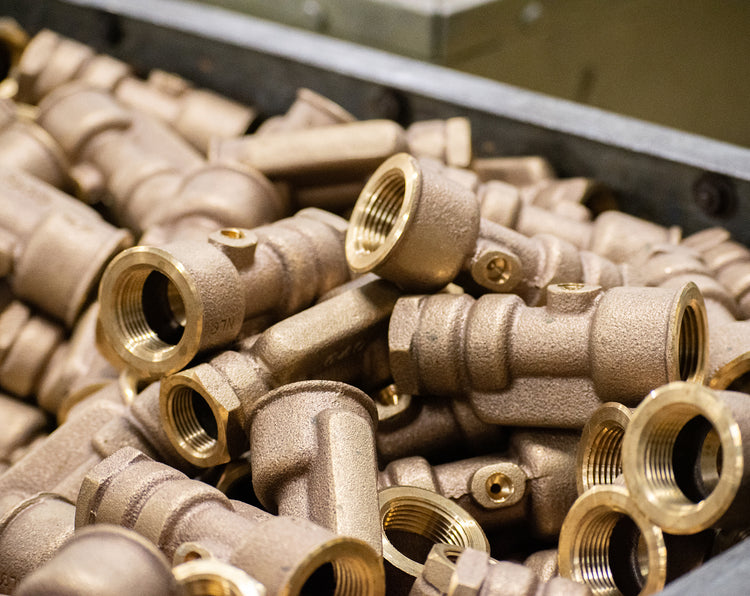
Threaded, compression, and specialty fittings listed in the catalog under NL variants.
✔ No-Lead Pitless Accessories
In pitless systems supplying drinking water, NL fittings ensure compliance where water transitions to horizontal distribution.
Every NL product in the catalog includes:
Material info
Application notes
Pressure ratings
Part numbers for ordering
Sizes compatible with standard well systems
Browse Merrill No-Lead Products
4. Why No-Lead Check Valves Matter in Potable Systems
Based on your catalog + Handbook guidance:
✔ Check valves touch all water pushed by the pump.
If the check valve contains lead, the entire potable system risks contamination.
✔ They prevent backflow into wells.
Handbook Book II reinforces that preventing contamination and backflow is essential.Water Systems Handbook 13th Edition
✔ NL check valves are necessary for:
Household drinking water systems
Municipal/platted home developments
Any system connected to plumbing fixtures
Any distribution line leading to consumption
Bronze Control Center Check Valve – No-Lead.
✔ Merrill offers multiple NL models
NL check and foot valve options are clearly identified throughout the Check & Foot Valves section on catalog pages 151–163.
The benefit for installers: zero compliance guesswork.
5. Why No-Lead Hydrants Matter (Even Outdoors)
This surprises many installers.
NL hydrants are needed when outdoor spigots or hydrants connect to the same potable water system feeding the home.
Because hydrants are part of the supply system, they must not introduce lead into:
Garden hoses occasionally used for drinking
Animal waterers
RV fill stations
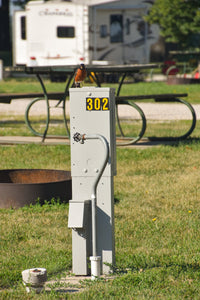
Campground water outlets
Outdoor potable service points
No-Lead hydrants help support potable water compliance when outdoor service points connect to drinking water systems.
The Water Systems Handbook stresses avoiding contamination from ANY access point (Book I).
Hydrants deliver water directly — they must be NL if tied to household drinking water.
6. NSF/ANSI 372 — Lead Content Certification
NSF/ANSI 372 is the most recognized standard verifying that components meet U.S. lead-free requirements.
Merrill's NL components are manufactured to meet these compliance standards, as documented in NL product listings.
This gives wholesalers and contractors:
Legal protection
Installation clarity
Consumer safety confidence
And it protects Merrill from liability issues — something we deeply care about.
Merrill No-Lead catalog symbol
7. How Wholesalers Can Educate Installers
Most installers don't know the fine points of federal lead regulations — but wholesalers explain products to them daily.
Here's the most effective education strategy:
A. Explain When NL Is Required
Give installers the rule of thumb:
"If the water can be consumed at any point downstream, the component must be No-Lead."
Wholesalers should highlight:
NL check valves
NL hydrants
NL fittings
NL adapters
B. Show the Catalog NL Labeling
Merrill makes it easy:
NL is printed directly in the product name
NL variants have their own part numbers
Pages 151–163 show NL check and foot valve options clearlyMerrill 2026 Catalog
Show contractors the difference once → they never forget it.
C. Train on Sanitary System Basics Using the Handbook
Handbook Book I–II shows the importance of sanitary integrity in drinking water systems and the role each component plays.
Teaching installers WHY it matters increases compliance dramatically.
D. Emphasize Liability Protection
No-lead components protect:
The homeowner's health
The installer's license
The wholesaler's reputation
Merrill's standing in the industry
8. Why No-Lead Components Will Only Grow in Importance
Industry data suggests growing focus on:
PFAS
Metals contamination
Water quality lawsuits
Stricter state regulations
Future EPA updates
With more homeowners aware of water safety, and federal attention rising, NL components aren't going anywhere — they're becoming even more essential.
Merrill is already ahead of the curve with fully developed NL lines.
Final Takeaway
No-lead isn't optional — it's the law.But beyond compliance, NL components:
Improve sanitary safety
Protect groundwater
Ensure system integrity
Build trust with homeowners
Support installers and wholesalers
Reduce liabilities for everyone
With Merrill's clearly labeled NL products and engineering-driven designs, contractors have everything they need to build safe, modern drinking water systems with total confidence.
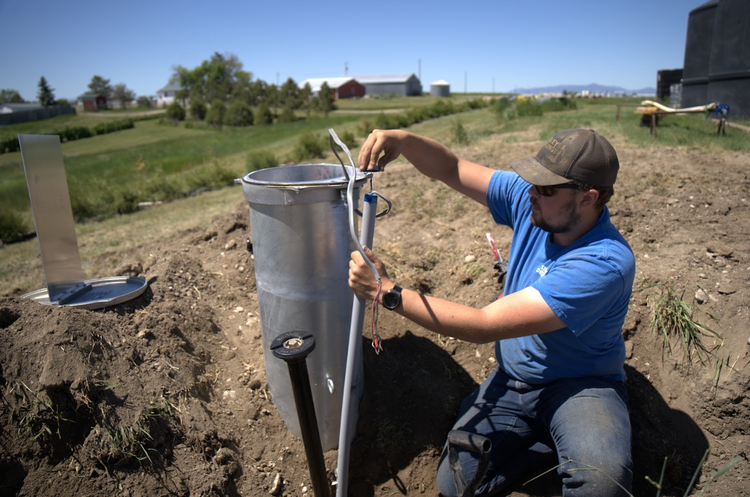
Whether you're a wholesaler, a new technician, or someone supporting contractors in the field, knowing the full lifecycle of a water system — from drilling through distribution — is essential. The Water Systems Handbook (Book I–IV) outlines the full construction of a sanitary, high-performing well system, while the Merrill Catalog provides the specific components used at each stage.
This guide gives your team a clear, technical, manufacturer-approved overview of how a water system works and where each Merrill component fits in.
1. Stage One: Drilling & Well Construction
Where groundwater access begins.
The Water Systems Handbook explains that proper well construction includes:
Drilling to an aquifer appropriate for long-term adequate yield
Setting casing to isolate the well from contaminated shallow layers
Sealing the annular space with grout to prevent surface water infiltration(Book I, Well Construction)
A sanitary well requires:
✔ Casing termination above ground
The Handbook requires wells to be completed above finished grade to avoid contamination from surface water.
✔ A sanitary well cap or well seal
A critical protection to prevent insects, debris, and vermin infiltration.
✔ A proper vent
Vents must be screened to allow pressure equalization while keeping out contaminants.
Merrill components used at this stage (Catalog pp. 80-85):
Well caps
Sanitary caps
Well seals
All provide casing-size charts and specifications.Merrill2026
Your browser does not support the video tag.
Sanitary well caps and seals help protect the well opening from insects, debris, and surface contamination.
2. Stage Two: Submersible Pump Installation
How water is lifted from the aquifer.
According to the Handbook, submersible pumps are installed deep in the well and connected by drop pipe, wire, and a discharge assembly (Book II, Pump Installation).Water Systems Handbook 13th Edition
Key system components:
✔ Drop pipe
Transmits water from the pump to the surface.
✔ Pump cable & splice kit
Provides power while maintaining waterproof electrical connection.
✔ Safety rope
Provides extra safety if pipe fails and supports pump weight during lowering and servicing.
✔ Check valves
Prevent backflow, pressure loss, and water hammer. The Handbook and Merrill catalog align on the need for multiple check valves in deep wells.
Merrill components (Catalog pp. 151–163):
Several material options available in check valves
No-lead check valves
Variable Flow Check Valve
Stainless steel options and specialty valves
Check valves and pump accessories help protect the submersible pump system and keep water moving in the right direction.
3. Stage Three: Pitless Discharge & Sanitary Sealing
The transition between underground and the pressure system.
The Water Systems Handbook defines pitless units and adapters as components that:
Provide a watertight, frost-proof connection
Prevent contaminants from entering near-surface openings
Allow full service of submersible equipment without or limited excavation(Book IV: Components)
Merrill Pitless Units (Catalog pp. 42-79):
Factory pressure-tested
ASSE/PAS-certified watertight design
Positive mechanical seal with stainless adjusting nut
Stainless steel on all parts touching water
Full diameter access inside well
These ensure long-term sanitary integrity and easy well maintenance.
SPP Pitless Units help create a watertight, frost-proof connection between the well and the underground discharge line.
4. Stage Four: Distribution to the Pressure System
Where water leaves the well and enters the home or facility.
This stage includes:
✔ Pressure tank
Maintains constant water pressure and reduces pump cycling.(Book VIII, Pressure Tanks – Handbook)
✔ Pressure switch
Controls pump on/off operation based on waterline pressure.
✔ Relief valve
Protects the system from dangerous overpressure.
✔ Tank tees & fittings
Connects tank, switch, gauge, drain valve, and relief valve.
Merrill manufactures essential fittings that appear throughout this part of the system.
Your browser does not support the video tag.
Heavy-duty pressure switch features help control pump operation based on system pressure.
5. Stage Five: Yard Hydrants & Outside Water Distribution
How water is delivered outdoors.
The Water Systems Handbook describes hydrants as surface-accessible delivery points requiring frost protection and proper drainage.
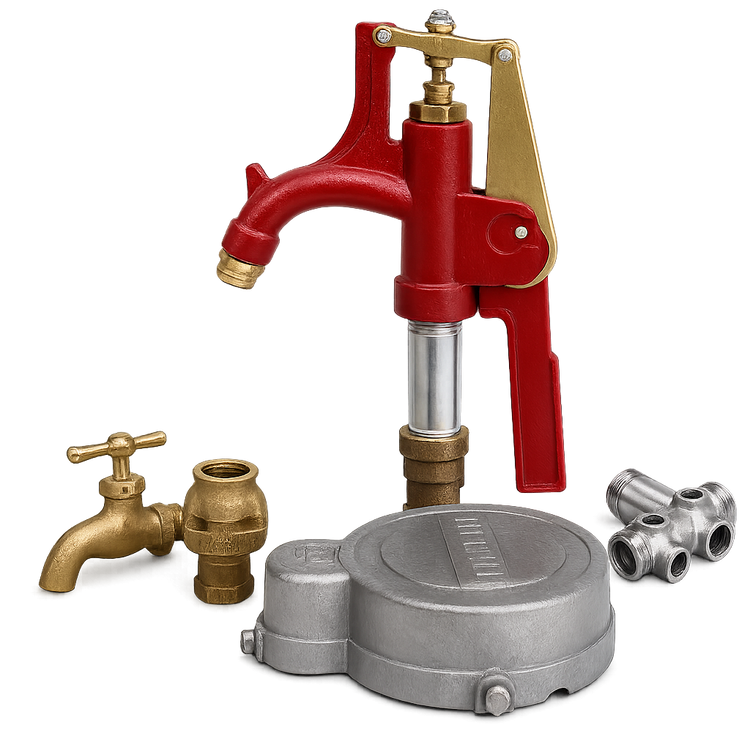
Merrill hydrants — AnyFlow, Hide-Drant, C-1000, M-2000, R-6000, E-5000, and several more — use a drain-back design where:
The valve body is buried below frost line,
Water drains into the ground or a clean gravel bed after shutoff.
Correct installation prevents freeze failures, back-siphonage, and contamination risks.
AnyFlow hydrants use a drain-back design to help protect water access from freezing after shutoff.
6. Stage Six: Inside Distribution & Final Use
How water moves inside the building.
Components include:
Shutoff valves
Manifold fittings
Well faucets
Hose bibbs
Indoor water distribution fittings
While Merrill is known primarily for external well system components, many of its parts (e.g., NL fittings, valves, adapters) integrate into indoor systems depending on the application.
7. Understanding the System as a Whole (Why This Matters for Wholesalers & New Techs)
The Water Systems Handbook stresses that every well is a complete sanitary system, not a collection of random parts.
A wholesaler or technician who understands the entire path:
aquifer → pump → pitless → pressure tank → distribution → hydrant
can:
Recommend the right components
Reduce contractor callbacks
Help diagnose system failures
Increase system longevity
Ensure sanitary compliance
Improve customer trust
And because Merrill covers nearly every stage with certified components, technicians can build a compatible, long-lasting reputation using one supplier.
8. Where Merrill Components Fit in the Full System (Catalog-Verified)
System Stage
Merrill Component
Catalog Pages
Wellhead
Well caps, seals, vents
80–85
Submersible pump
Check valves
151–163
Frost protection
Pitless units, adapters
42–79
Yard distribution
Frost-proof hydrants
8–41
Above-ground and below-ground plumbing
Fittings, valves, accessories
See index
All page references are directly verifiable in the 2026 Catalog. You can click Here: Merrill2026
Final Takeaway
Wholesalers and new technicians don’t just sell components — they support an entire sanitary water system.
When you understand:
How wells are drilled
How pumps are installed
How pitless units protect sanitation
How pressure tanks assist flow
How hydrants deliver water
How fittings ensure system integrity
…you become a trusted partner to contractors, drillers, and homeowners.
And with Merrill’s catalog covering nearly every stage from drilling to distribution, your team can confidently recommend reliable, certified, American-engineered components backed by 77 years of industry experience.
Your Cart
0
Choosing a selection results in a full page refresh.