Back to Blog


The Rising Importance of No-Lead Components in Drinking Water Systems
Providing safe drinking water isn't just a good practice — it's federal law. Over the past decade, U.S. regulations have tightened dramatically around lead content in potable water systems, forcing manufacturers, wholesalers, and installers to adapt.
Merrill Manufacturing has responded with a complete line of No-Lead (NL) components — hydrants, check valves, fittings, and adapters — engineered and labeled specifically for drinking water compliance.
This guide explains exactly why NL components matter, what federal regulations require, and how wholesalers can educate technicians and contractors using credible, engineering-based information.
1. What "No-Lead" Actually Means (Federal Law)
Under the Reduction of Lead in Drinking Water Act (effective 2014):
✔ Components in contact with drinking water must contain
no more than 0.25% weighted average lead content.
This regulation applies to:
-
Any component carrying potable water
Products must also meet NSF/ANSI lead-free compliance standards to be legally sold for drinking water distribution.
This is why Merrill labels all NL products clearly in the catalog.
Nothing is left to guesswork.
(Catalog NL Check Valves, NL Hydrants, NL Adapters — designated "NL")
(Catalog NL Check Valves, NL Hydrants, NL Adapters — designated "NL")
The NL stamp helps identify Merrill components designed for No-Lead compliance.
2. What the Water Systems Handbook Says About Sanitary Protection
The Water Systems Handbook focuses heavily on preventing contamination at every point in a potable system. It specifies that:
-
Components must prevent surface water, pollutants, insects, or chemicals from entering the water supply.
-
All equipment in contact with drinking water must be designed to reduce contamination risk and maintain sanitary integrity.
Sanitary well caps help prevent surface water, insects, debris, and other contaminants from entering the water supply.
Using No-Lead brass, stainless steel or certified materials is part of maintaining this sanitary standard — because lead is, by definition, a chemical contaminant.
For Merrill, NL products directly support these Handbook mandates for sanitary drinking water systems.
3. Merrill's No-Lead Product Lines (Catalog-Verified)
The Merrill Catalog clearly marks every NL component with the "NL" designation. These include:
(Catalog pp. 151–163)
Designed for potable systems where backflow prevention must meet lead-free requirements.
Designed for potable systems where backflow prevention must meet lead-free requirements.


Merrill NL-stamped components: C-1000 Valve Body, No-Lead Pressure Gauge, and No-Lead Brass Tee Handle Sampling Valve.
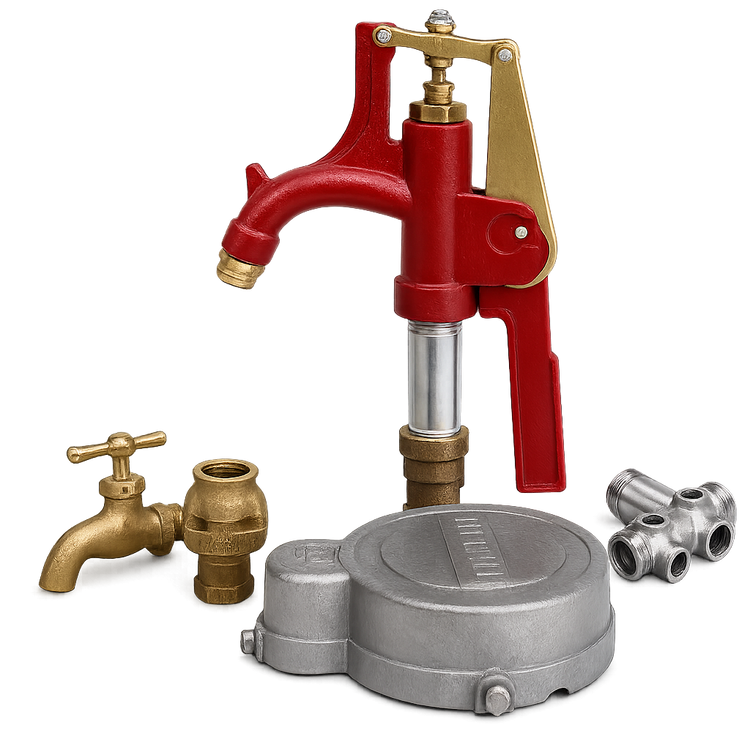
Specific Merrill hydrant models are available in NL versions, ensuring compliance where hydrants are plumbed into potable supply lines.
(Catalog hydrant section pp. 8–41)
(Catalog hydrant section pp. 8–41)
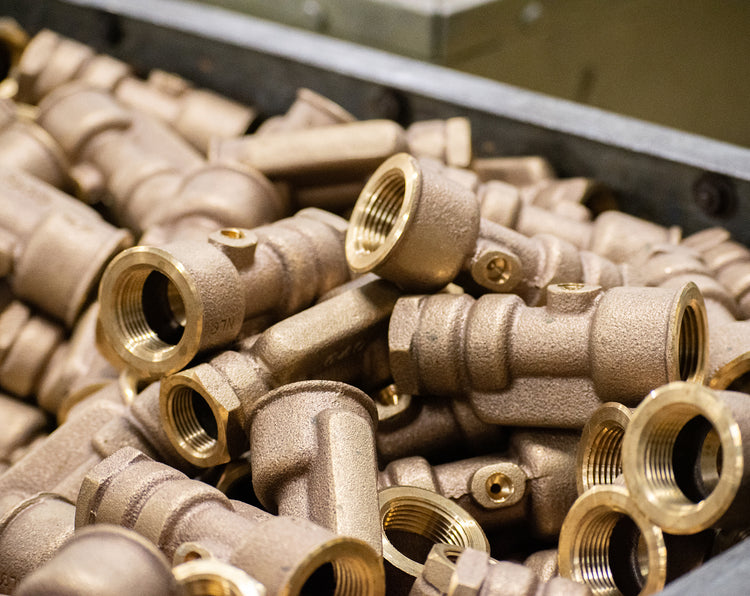
Threaded, compression, and specialty fittings listed in the catalog under NL variants.
In pitless systems supplying drinking water, NL fittings ensure compliance where water transitions to horizontal distribution.
Every NL product in the catalog includes:
-
Material info
-
Application notes
-
Pressure ratings
-
Part numbers for ordering
-
Sizes compatible with standard well systems
4. Why No-Lead Check Valves Matter in Potable Systems
Based on your catalog + Handbook guidance:
✔ Check valves touch all water pushed by the pump.
If the check valve contains lead, the entire potable system risks contamination.
✔ They prevent backflow into wells.
Handbook Book II reinforces that preventing contamination and backflow is essential.
Water Systems Handbook 13th Edition
Water Systems Handbook 13th Edition
✔ NL check valves are necessary for:
-
Household drinking water systems
-
Municipal/platted home developments
-
Any system connected to plumbing fixtures
-
Any distribution line leading to consumption
Bronze Control Center Check Valve – No-Lead.
✔ Merrill offers multiple NL models
NL check and foot valve options are clearly identified throughout the Check & Foot Valves section on catalog pages 151–163.
The benefit for installers: zero compliance guesswork.
5. Why No-Lead Hydrants Matter (Even Outdoors)
This surprises many installers.
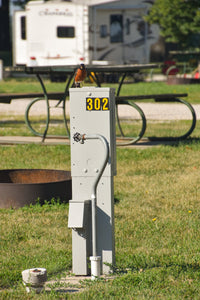
NL hydrants are needed when outdoor spigots or hydrants connect to the same potable water system feeding the home.
Because hydrants are part of the supply system, they must not introduce lead into:
-
Garden hoses occasionally used for drinking
-
Animal waterers
-
RV fill stations
-
Campground water outlets
-
Outdoor potable service points
No-Lead hydrants help support potable water compliance when outdoor service points connect to drinking water systems.
The Water Systems Handbook stresses avoiding contamination from ANY access point (Book I).
Hydrants deliver water directly — they must be NL if tied to household drinking water.
6. NSF/ANSI 372 — Lead Content Certification
NSF/ANSI 372 is the most recognized standard verifying that components meet U.S. lead-free requirements.
Merrill's NL components are manufactured to meet these compliance standards, as documented in NL product listings.
This gives wholesalers and contractors:
-
Legal protection
-
Installation clarity
-
Consumer safety confidence
And it protects Merrill from liability issues — something we deeply care about.
Merrill No-Lead catalog symbol
7. How Wholesalers Can Educate Installers
Most installers don't know the fine points of federal lead regulations — but wholesalers explain products to them daily.
Here's the most effective education strategy:
A. Explain When NL Is Required
Give installers the rule of thumb:
"If the water can be consumed at any point downstream, the component must be No-Lead."
Wholesalers should highlight:
-
NL check valves
-
NL hydrants
-
NL fittings
-
NL adapters
B. Show the Catalog NL Labeling
Merrill makes it easy:
-
NL is printed directly in the product name
-
NL variants have their own part numbers
-
Pages 151–163 show NL check and foot valve options clearly
Merrill 2026 Catalog
Show contractors the difference once → they never forget it.
C. Train on Sanitary System Basics Using the Handbook
Handbook Book I–II shows the importance of sanitary integrity in drinking water systems and the role each component plays.
Teaching installers WHY it matters increases compliance dramatically.
D. Emphasize Liability Protection
No-lead components protect:
-
The homeowner's health
-
The installer's license
-
The wholesaler's reputation
-
Merrill's standing in the industry
8. Why No-Lead Components Will Only Grow in Importance
Industry data suggests growing focus on:
-
PFAS
-
Metals contamination
-
Water quality lawsuits
-
Stricter state regulations
-
Future EPA updates
With more homeowners aware of water safety, and federal attention rising, NL components aren't going anywhere — they're becoming even more essential.
Merrill is already ahead of the curve with fully developed NL lines.
Final Takeaway
No-lead isn't optional — it's the law.
But beyond compliance, NL components:
But beyond compliance, NL components:
-
Improve sanitary safety
-
Protect groundwater
-
Ensure system integrity
-
Build trust with homeowners
-
Support installers and wholesalers
-
Reduce liabilities for everyone
With Merrill's clearly labeled NL products and engineering-driven designs, contractors have everything they need to build safe, modern drinking water systems with total confidence.
Tags:
Share: